Blood bags are essential components in the medical field, particularly in transfusion medicine. Here are details about their types and uses:
Types of Blood Bags
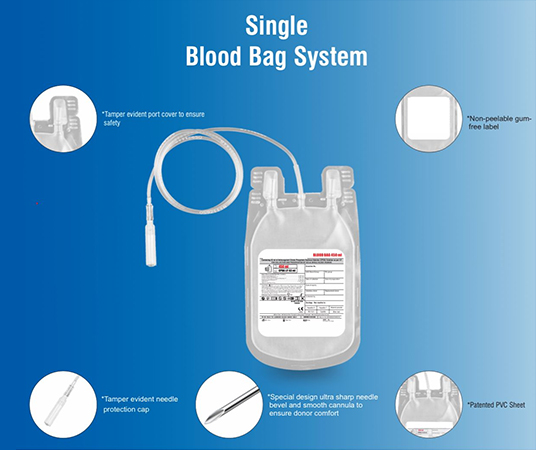
1. Single Blood Bag:
Description: Contains one bag.
Use: Used for the collection and storage of whole blood.
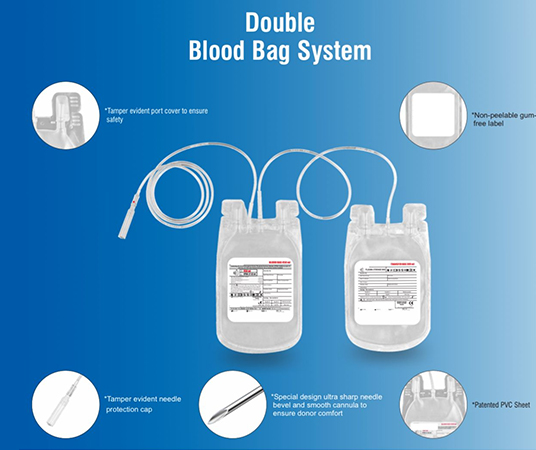
2. Double Blood Bag:
Description: Consists of a primary bag and a secondary bag.
Use: Allows separation of whole blood into two components, typically red blood cells and plasma.
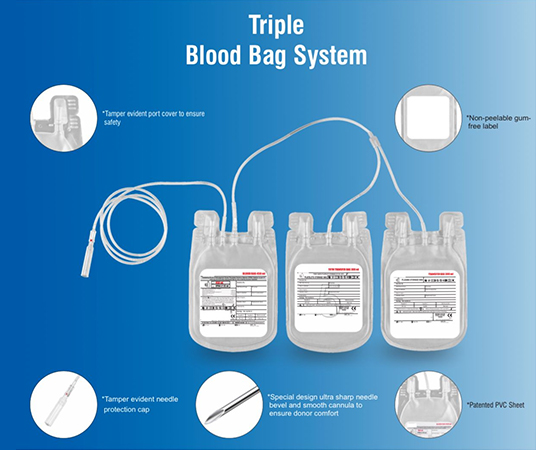
3. Triple Blood Bag:
Description: Includes a primary bag and two secondary bags.
Use: Enables separation of whole blood into three components: red blood cells, plasma, and platelets.
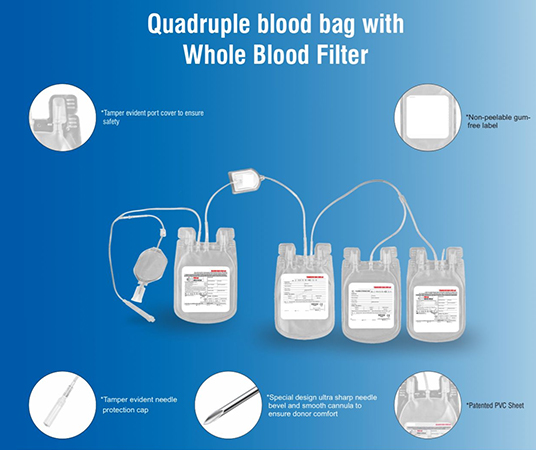
4. Quadruple Blood Bag
Description: Contains a primary bag and three secondary bags.
Use: Allows for the separation of whole blood into four components: red blood cells, plasma, platelets, and cryoprecipitate.
5. Apheresis Blood Bag:
Description: Specially designed for apheresis procedures.
Use: Used to collect specific blood components (e.g., plasma or platelets) while returning the rest of the blood to the donor.
Uses of Blood Bags
1. Whole Blood Collection and Storage:
Blood bags are used to collect whole blood from donors and store it safely until needed for transfusion.
2. Component Separation:
Blood bags facilitate the separation of whole blood into its various components (red blood cells, white blood cells, plasma, and platelets), which can then be used to treat specific conditions.
3. Transfusion:
Blood bags are used to administer blood or blood components to patients in need, such as those undergoing surgery, experiencing trauma, or suffering from certain medical conditions like anemia or clotting disorders.
4. Apheresis:
Specialized blood bags are used in apheresis procedures to collect specific components like plasma or platelets, which are often needed for treating cancer patients, burn victims, or individuals with clotting disorders.
Features of Blood Bags
Material: Typically made of medical-grade PVC (polyvinyl chloride) to ensure biocompatibility and durability.
Anticoagulant Solutions: Blood bags are pre-filled with anticoagulant solutions like CPDA-1 (Citrate Phosphate Dextrose Adenine) or CPD (Citrate Phosphate Dextrose) to prevent blood clotting.
Sterility: Blood bags are sterilized to ensure they are free from contaminants and safe for use in medical procedures.
Labels: Clearly labeled with information on volume, anticoagulant type, and expiration date for proper handling and identification.